
August 11, 2026
Industrial-Grade Wiring Harnesses and Fastener Accessories for Agricultural Machinery Manufacturing
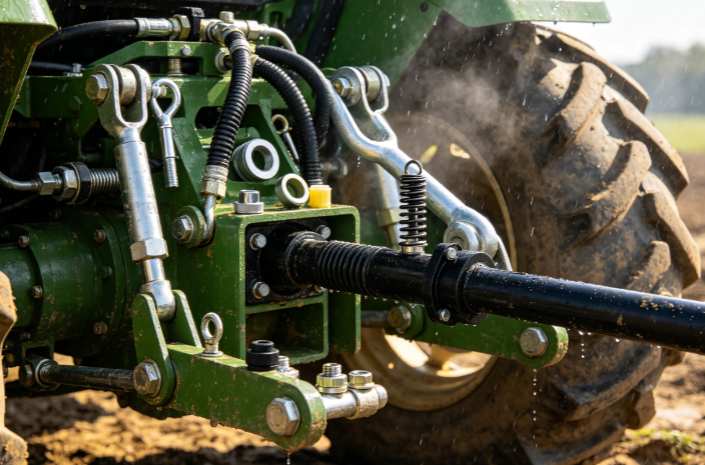
Table of Contents
Introduction: The Harsh Realities of Agricultural Environments
Industrial-Grade Wiring Harnesses: The Electrical Nervous System
Essential Fastener Accessories for Agricultural Machinery
Standards and Compliance: SAE J 1614 and Beyond
Supplier Capabilities: What to Look For
FAQ
1. Introduction: The Harsh Realities of Agricultural Environments
Agricultural machinery operates in conditions that would quickly destroy standard industrial components. Tractors, combines, sprayers, and balers face relentless exposure to dust, moisture, chemicals, temperature extremes, and constant vibration. The wiring harnesses and fastener accessories used in these machines must be engineered to withstand these punishing environments while maintaining reliable performance over long service lives.
Unlike factory-floor equipment, agricultural machinery cannot be easily moved into a maintenance bay when a connector fails or a fastener loosens. Downtime during planting or harvest seasons means lost revenue and missed windows of opportunity. This is why industrial-grade components are not a luxury—they are a necessity.
2. Industrial-Grade Wiring Harnesses: The Electrical Nervous System
The wiring harness in agricultural machinery is the electrical nervous system that transmits power and signals to every component—from engine sensors and hydraulic valves to lighting and GPS guidance systems. Industrial-grade harnesses must meet specific performance criteria to survive in the field.
Key Requirements for Agricultural Wiring Harnesses:
Requirement | Why It Matters |
IP67 or higher waterproofing | Protects against rain, washing, and dust ingress in the field |
Corrosion-resistant materials | PA66 nylon housing resists chemicals, UV, and moisture |
Vibration-resistant connections | Screw or locking terminations prevent loosening during operation |
Wide temperature tolerance | -40°C to +105°C range for freezing winters and hot summers |
Abrosion and aging resistance | Withstands constant movement and chemical exposure |
Connector Types and Configurations:
Agricultural wiring harnesses use specialized connectors designed for field conditions. The M20 series agricultural connectors, for example, feature screw-lug terminations for secure, vibration-resistant power transmission and PA66 nylon housing with rubber seals for IP67 protection . These connectors are available in 2-pin or 3-pin configurations with current handling from 20A to 26A depending on the model .
For lighting and accessory connections, 7-pin 12V connectors are commonly used, with color-coded wiring to simplify installation of turn signals, brake lights, and other functions . These connectors feature weatherproof covers and rubber seals to prevent water and dust ingress.
Standard Compliance:
Wiring distribution systems for agricultural machinery must comply with SAE J 1614, the standard that specifies requirements and design guidelines for electrical wiring systems of less than 50 V used on off-road, self-propelled work machines . This covers cable diameters from 0.35 to 19 mm² and defines requirements for construction, materials, and testing.
Supplier Landscape:
Specialized wiring harness manufacturers serve the agricultural sector with custom solutions. Fuzhou Fuqiang Precision Co., Ltd., for example, manufactures customized wiring harnesses for agricultural machinery alongside automotive and energy storage applications, holding ISO9001 and IATF16949 certifications . Similarly, OEM S.r.l., an Italian company with nearly 40 years of experience, specializes in custom electrical wiring harnesses for tractors, sprayers, and other agricultural equipment, offering 100% electrical and functional testing .
3. Essential Fastener Accessories for Agricultural Machinery
Fastener accessories in agricultural machinery must perform under extreme conditions. Common fastener types include :
Fastener Type | Application |
Pins (clevis, cotter, hitch, lynch, snap) | Three-point hitch systems, attachment connections, mechanical linkages |
Retaining rings and snap rings | Shaft and bore retention for rotating assemblies |
Bushings and bearings | Reducing friction between shafts and bores, bearing loads |
Hose clamps | Securing hydraulic hoses and fluid lines |
Grease fittings | Lubrication points on pivot pins and moving assemblies |
Springs (compression, extension) | Tension and return mechanisms |
Lock washers and nylon locking nuts | Vibration-resistant mechanical connections |
A quick glance at any agricultural parts catalog reveals the diversity required. John Deere parts lists, for example, include hexagonal head flanged screws, spring locking pins, round head square neck bolts, and external electrical connector terminals—all available as standard service parts . Even a single assembly like an electronic scale system for a New Holland grinder-mixer requires multiple fastener types: circuit breakers, screws, lock washers, nuts, wiring harnesses, terminal connectors, clamps, bolts, and cable ties .
Material and Finish Requirements:
Fasteners for agricultural machinery typically use materials that resist corrosion and wear:
·
Stainless steel (300 and 400 series) for corrosion resistance
·
·
Carbon steel with zinc clear or yellow finishes for cost-effective durability
·
·
Medium carbon steel with black powder coat for hitch pins and high-strength applications
·
·
Spring steel for retaining rings and snap rings
·
Finishes such as hot-dipped galvanized, passivated, zinc flake, and mechanical zinc provide additional corrosion protection in harsh conditions .
4. Standards and Compliance: SAE J 1614 and Beyond
Agricultural machinery component standards ensure interoperability, safety, and reliability. For wiring systems, SAE J 1614 provides the foundational specification for wiring distribution systems used on agricultural tractors and off-road work machines . This standard covers:
·
Electrical system requirements for less than 50 V
·
·
Cable diameter specifications (0.35 to 19 mm²)
·
·
Design guidelines for construction and materials
·
For fastener components, compliance with relevant ISO, DIN, and SAE standards ensures dimensional accuracy and material properties. Suppliers who maintain certifications like ISO 9001 (quality management) and IATF 16949 (automotive quality—often applied to agricultural machinery components as well) demonstrate commitment to quality control and process discipline .
Standards development is an ongoing process. The Korean government's Ministry of Agriculture and Forestry, for example, conducted a study in 1999 to standardize agricultural machinery components including external electrical connectors and quick-action hydraulic couplings, proposing KS (Korean Standard) establishment for 8 components across 4 machine types . This illustrates the importance of component standardization for serviceability and parts availability.
5. Supplier Capabilities: What to Look For
When sourcing wiring harnesses and fastener accessories for agricultural machinery, evaluate suppliers on the following criteria:
For Wiring Harness Suppliers:
Capability | What to Look For |
Industry experience | Proven track record in agricultural or off-highway vehicle sectors |
Certifications | ISO 9001, IATF 16949 |
In-house manufacturing | Full control over production, no outsourcing |
Testing capability | 100% electrical and functional testing |
Customization | Co-design capability for application-specific requirements |
Global footprint | Presence in key markets for local support |
For Fastener Suppliers:
Capability | What to Look For |
Product breadth | Wide range of pins, washers, nuts, bolts, retaining rings |
Material options | Stainless steel, carbon steel, specialty alloys |
Finish capabilities | Zinc plating, passivation, powder coating, hot-dip galvanizing |
Engineering support | Custom manufacturing and sourcing assistance |
Minimum order flexibility | Low minimum quantities for maintenance and repair applications |
Suppliers like Huyett position themselves as master distributors and custom manufacturers for the agricultural sector, providing access to over 200,000 parts from leading manufacturers with consolidated shipping and engineering support . This one-stop approach simplifies procurement for agricultural machinery OEMs and aftermarket distributors alike.
6. FAQ
Q: What IP rating is typically required for agricultural wiring harness connectors?
A: IP67 is the standard for agricultural connectors, ensuring protection against dust ingress and water immersion up to 1 meter for 30 minutes . Some applications may require IP68 for prolonged submersion.
Q: Why are screw-lug connectors preferred over push-in types in agricultural equipment?
A: Screw-lug connectors provide vibration-resistant, stable connections that are critical in agricultural machinery where constant movement and shock loads would cause push-in terminals to loosen .
Q: What is SAE J 1614 and why is it important?
A: SAE J 1614 is the standard that specifies requirements and design guidelines for electrical wiring systems used on agricultural tractors and off-road work machines. Compliance ensures that wiring harnesses meet industry-accepted safety and performance criteria .
Q: How do I identify the right fastener for a specific agricultural application?
A: The application drives the fastener choice. Pins (clevis, cotter, hitch) are used for attachment connections and three-point hitches. Retaining rings and snap rings secure rotating assemblies. Hose clamps secure hydraulic lines. Lock washers and nylon nuts provide vibration resistance. Consult engineering specifications for material, finish, and grade requirements .
Q: Can standard industrial wiring harnesses be used in agricultural machinery?
A: Generally, no. Standard industrial harnesses lack the IP67 waterproofing, corrosion resistance, wide temperature tolerance (-40°C to +105°C), and vibration resistance required for agricultural applications .